




According to the latest estimates:
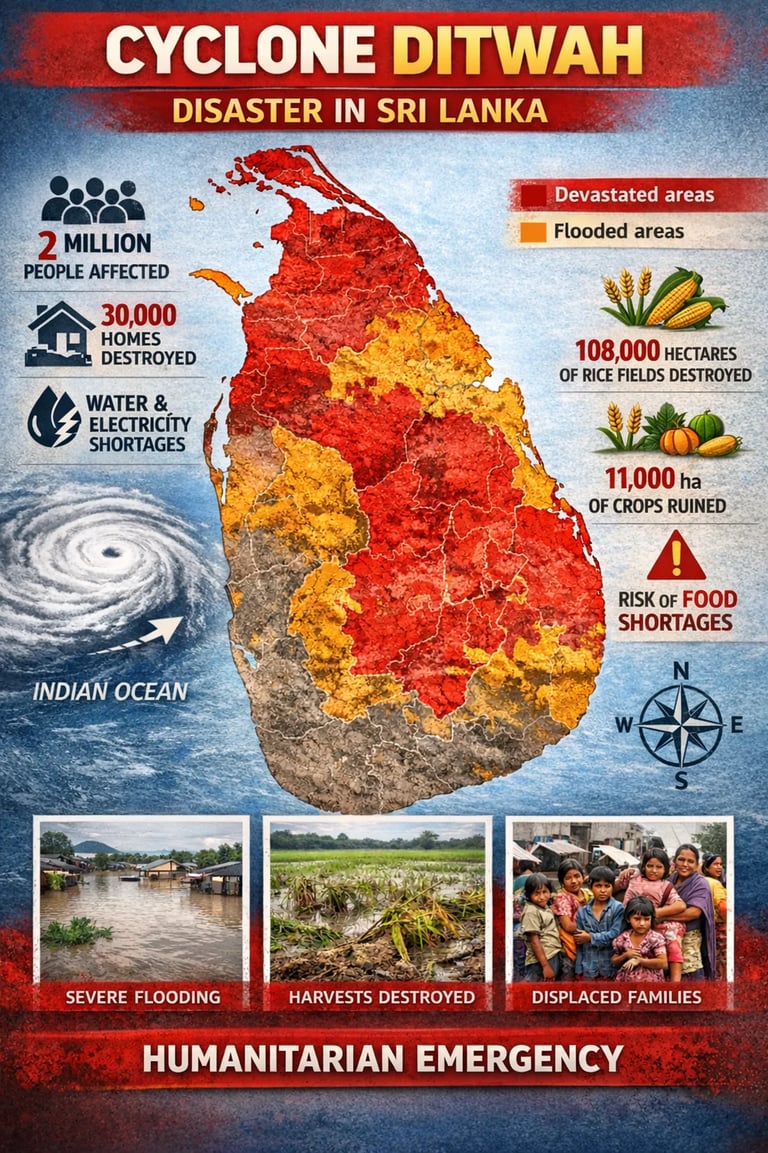
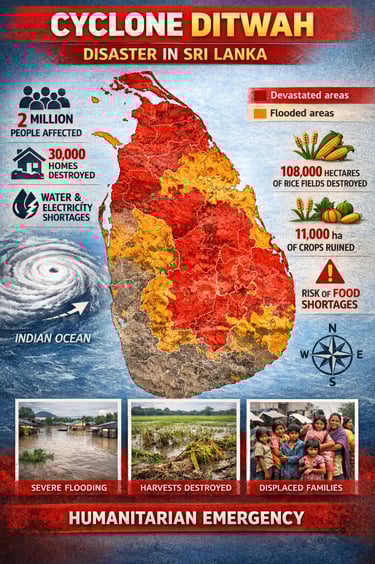
108,000 hectares of rice fields have been completely destroyed;
11,000 hectares of field crops have been wiped out, including 6,600 hectares of maize and 6,143 hectares of vegetables;
The floods occurred in the middle of the Maha season, the country's main sowing period, destroying the work of nearly 775,000 farmers.
****
A new humanitarian crisis is currently unfolding that will last for many months, plunging families into deep distress.
Human and economic impact
Thousands of farming families have seen their livelihoods destroyed, with the loss of their crops, livestock and farms.
The damage to water infrastructure is considerable:
1,777 reservoirs,
483 dams,
and 1,936 irrigation canals,
have been destroyed or severely damaged, compromising agricultural production in the long term.
In an already fragile context, where 38% of rural households are in debt, these losses are likely to lead to a spiral of over-indebtedness, forcing some farmers to sell their land, thereby exacerbating rural precariousness and inequalities.
A wider crisis
This disaster highlights Sri Lanka's high vulnerability to the effects of climate change, exacerbated by deforestation.
The intensification of extreme rainfall increases the risk of landslides, soil erosion and destruction of agricultural infrastructure, causing lasting damage to rural areas.
Although the government has initiated compensation measures, the exceptional scale of the damage far exceeds its financial and operational capacities, making increased support, both national and international, essential.




These flooded crops pose a major risk of national shortages of rice and vegetables, with direct consequences for food security and the livelihoods of rural populations.
Cyclone Ditwah: a food and agricultural threat more serious than the tsunami
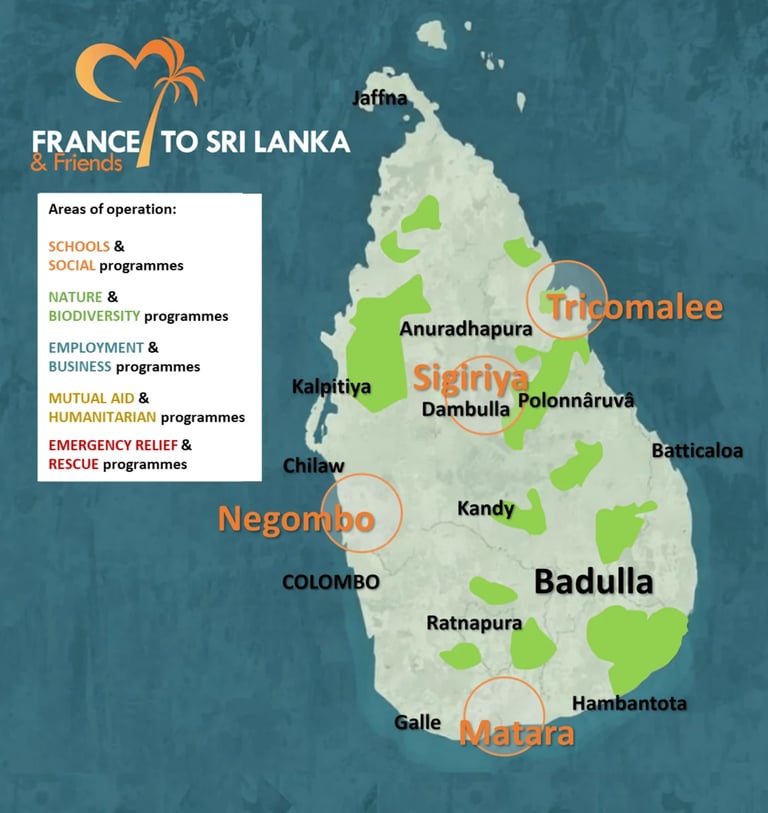
Areas of operation: Territory of SRI LANKA
Contact :
FRANCE TO SRI LANKA
54 Montée des Ecureuils
73410 LA BIOLLE
SAVOIE - FRANCE
© 2025. All rights reserved.
FRANCE TO SRI LANKA et FRIENDS TO SRI LANKA sont des marques déposées.

Bank : CREDIT MUTUEL
Registration number in the national register of associations : W732011373
SIREN : 924 484 124 00012
Association recognized as being of general interest according to DGFIP ruling of February 6, 2024
Association eligible under the French “Coluche Law” (provisions of 1 ter. of Article 200 of the General Tax Code) allowing a tax reduction of 75% for donations up to €1,000 for individuals residing in France.
_________________________________________________________